
Indian regulators have identified certain groups as 'financial conglomerates' and they are being monitored closely for any systemic risks they may pose.

'To the believers of crypto regulations, I have only one question to ask, how will you regulate it?'

To further strengthen the supervision on non-banking entities (NBFCs), the Reserve Bank on Tuesday issued revised guidelines on a Prompt Corrective Action (PCA) framework for such companies, excluding government-owned ones, effective from October 1, 2022, on the lines of what it had introduced for banks in 2002. The RBI came up with stricter supervisory norms under the PCA framework for banks after their bad loans mounted and balance-sheets bled badly. This involved restricting them from fresh lending, brand opening and, hiring, among others. The RBI said the revised PCA framework is also applicable to all deposit-taking non-banking financial companies (NBFCs), all non-deposit taking NBFCs in the middle, upper and top layers, including investment and credit companies, core investment companies, infrastructure debt funds, infrastructure finance companies and microfinance institutions.

Crypto assets should not be granted official currency or legal tender status, the much-awaited synthesis paper by the International Monetary Fund (IMF) and Financial Stability Board (FSB) has said ahead of the G20 leadership summit under India's presidency. However, the report has argued against a blanket ban on activities linked to crypto assets, explaining that such a move can be costly as well as technically demanding to enforce. Central banks should avoid holding crypto assets in their official reserve as they pose a risk to monetary and global financial stability, according to the synthesis paper.

If the new governor can think out of the box even as he signals that he can bat for the RBI cadre and respect its institutional memory, that will go a long way in getting out of the current impasse.
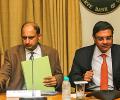
'Those who come from outside are surprised at the relatively small strength of the RBI supervisory cadre, relative to the needs of the country and the needs of the financial sector.'

'Facilitating conversion of well-run NBFCs into banks is urgently needed.'

'The Reserve Bank's independence has remained a work in progress, an enduring challenge that the nation has been grappling with on an ongoing basis,' says RBI Deputy Governor Dr Viral Acharya.
 © 2026 Rediff.com - Advertise with us - Disclaimer - Privacy Policy - Sitemap - Feedback - About us - Terms of use - Grievances